Swimming is one of the best exercises there is: gentle on the joints and suitable for almost any age or fitness level. To enjoy it for years, though, every swimmer needs good pool hygiene. Poor hygiene spreads what public-health agencies call recreational water illnesses. This article first appeared on this site in 2020 and has been updated.
What are recreational water illnesses?
The US Centers for Disease Control and Prevention (CDC) uses the term for illnesses spread by swallowing, breathing in or having contact with contaminated water in pools, hot tubs, water parks, lakes, rivers and the sea. The most common is diarrhoea, but they also include skin, ear, eye, respiratory and wound infections. Germs get in when swimmers swallow contaminated water or when it reaches an open wound, eyes, ears or nose.
Chlorine kills most germs quickly, but not all. The parasite Cryptosporidium, for example, is highly tolerant of chlorine and can survive for days even in a properly treated pool. That is why swimmers' own habits matter so much.
The seven habits
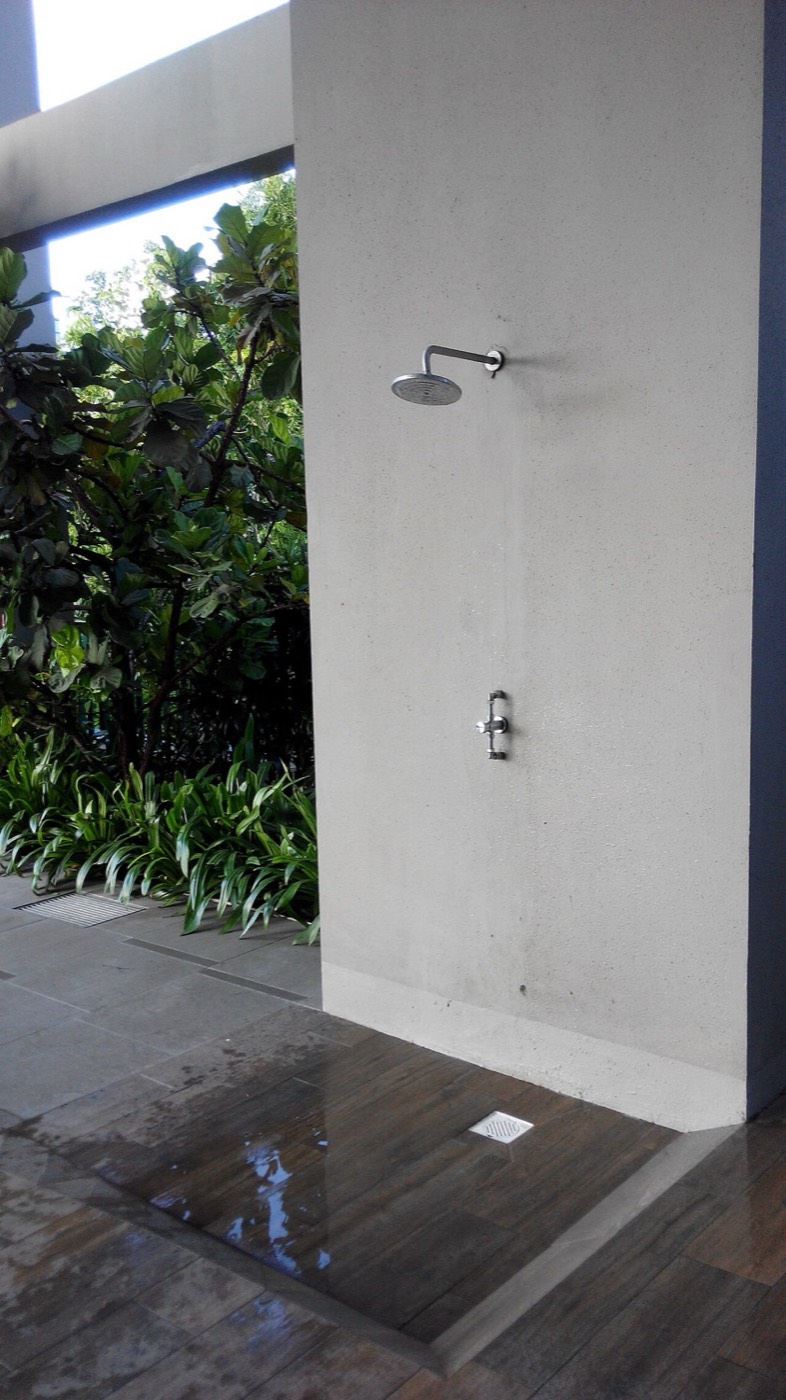
1. Shower before you swim
A one-minute rinse removes most of the sweat, cosmetics, sunscreen and dirt you carry in. Those substances react with chlorine and use it up, leaving less to kill germs, and they form the chloramines behind the sharp "pool smell" and red eyes.
2. Do not swim when you have diarrhoea
This is the single most important rule. If you have had diarrhoea, health agencies advise staying out of the water while ill, and for longer if a parasite such as Cryptosporidium has been diagnosed.
3. Do not swallow the water
Keep your mouth closed in the water and teach children the same. Even a well-treated pool is not drinking water.
4. Take regular toilet breaks
Take children to the toilet every hour or so, check swim nappies often and change them away from the pool. And yes, adults should not pee in the pool either.
5. Dry ears and treat cuts
Dry ears thoroughly after swimming to help prevent swimmer's ear, and cover cuts with waterproof dressings, or stay out until wounds heal.
6. Look before you leap
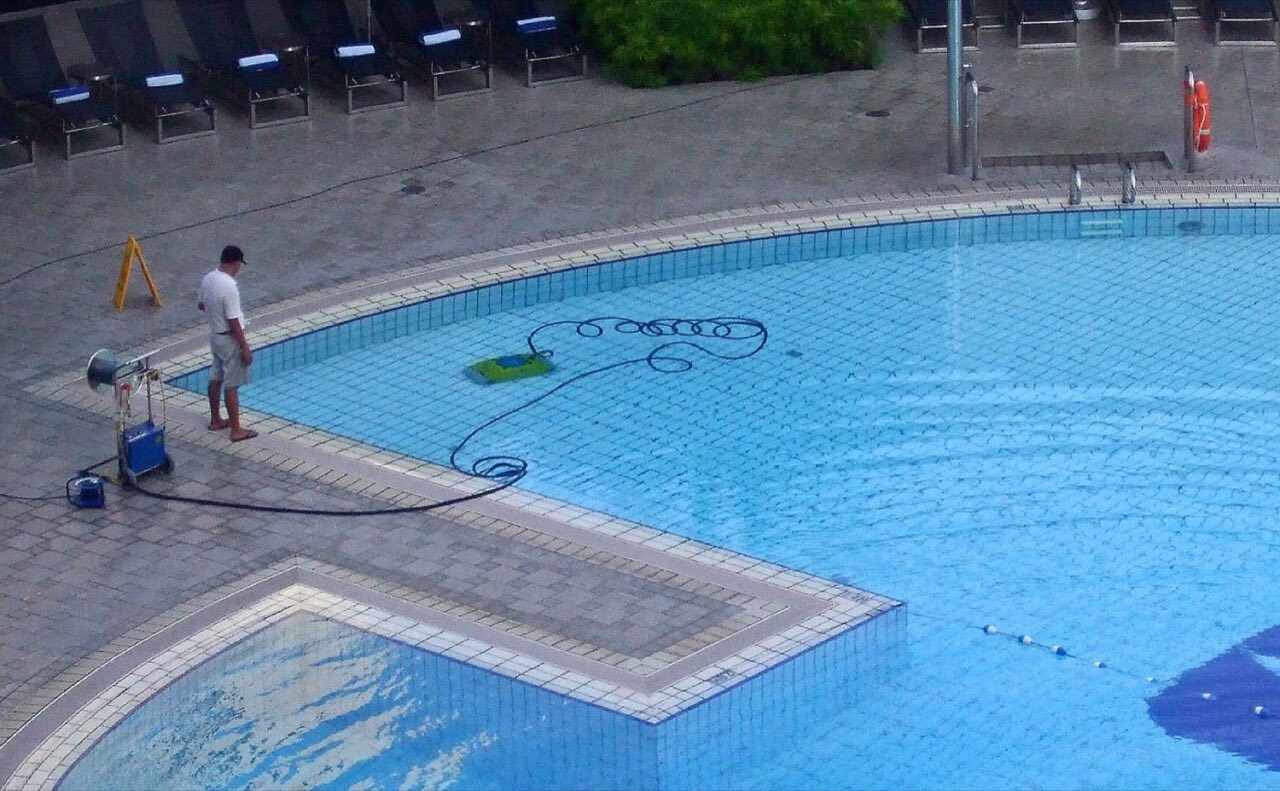
A clean pool has clear water (you should see the drain at the deep end), no strong chemical smell, smooth tiles and working pumps. Many public pools post their latest inspection results.
7. Keep your floats clean
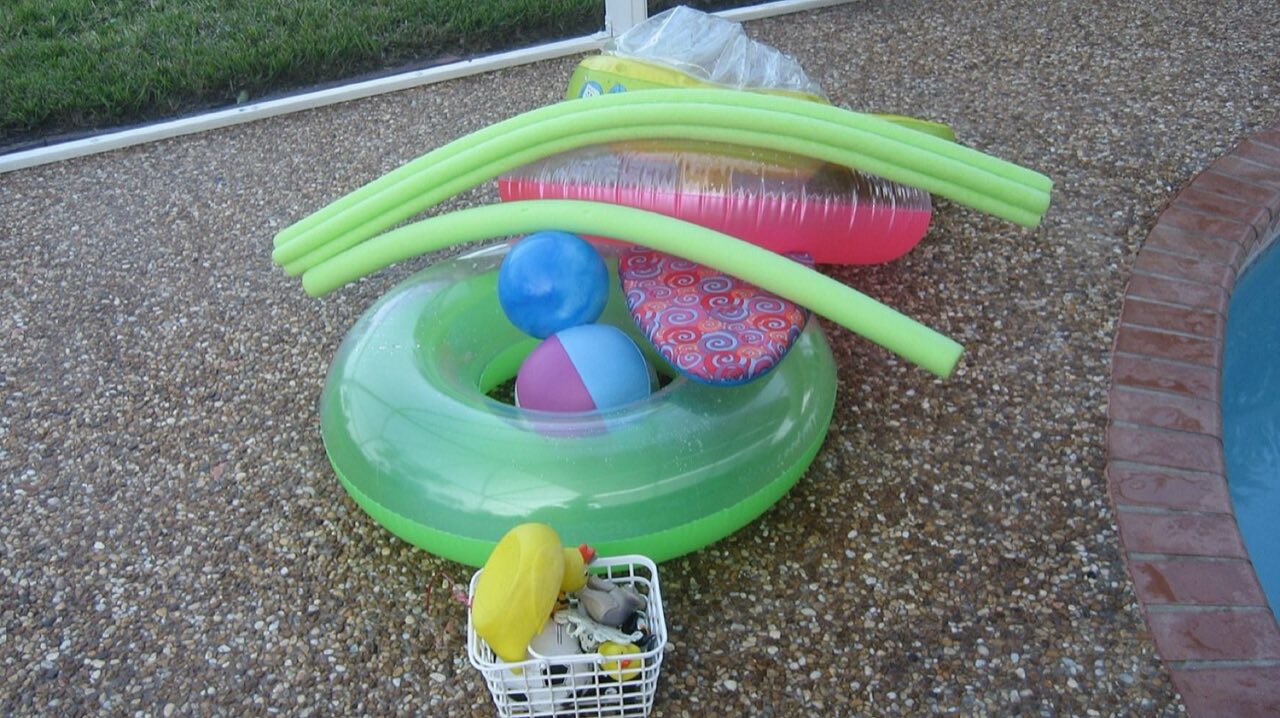
Floats sit on the water's surface where oils collect. Rinse them after use and clean them regularly; see how to clean pool floats.
The pee question
A study published in 2017 by researchers at the University of Alberta measured an artificial sweetener that passes through the body unchanged, and used it to estimate how much urine pools contain. In one large commercial pool of around 830,000 litres they estimated roughly 75 litres. The water was not dangerous, but urine and sweat react with chlorine to form irritating chloramines. The fix is simple: shower first and use the toilet.
Hygiene at mega-pools: dayclubs, wave pools and cruise decks
These habits matter most where the most people share the least water. At a packed Las Vegas dayclub on a summer Saturday, hundreds of guests can be standing waist-deep in the same pool, many of them wearing fresh sunscreen and holding a drink, which is exactly the mix that uses up chlorine fastest. Big resort operators run continuous filtration and frequent chemical testing, and health authorities inspect commercial pools, but no system can keep up with a crowd that skips the shower. The same goes for the pool deck on a cruise ship on a sea day, when the casino and the pool are the two busiest places on board. If you are heading to a Las Vegas pool party or dayclub or planning casino cruise sea days, rinse off first, keep your mouth closed in the water, and pick quieter morning hours when the water is freshest and the casino tables, conveniently, are at their least crowded.
Running your own pool? Good habits only work with good water chemistry. Our complete pool maintenance guide explains chlorine, pH and testing.