Few luxuries beat your own pool, ready for a dip whenever you like. But a pool that is not looked after soon becomes cloudy, green and expensive to fix. Regular, simple maintenance costs far less than a rescue job. This guide was first published on this site in 2019 and has been revised.
Pool care splits into two areas: keeping the physical parts clean and working, and keeping the water safe and balanced. Set up a routine and problems get spotted early.
Parts you need to clean
Skimmer and pump baskets
Skimmer baskets catch leaves and debris at the surface; the pump's hair and lint pot, usually behind a clear lid at the front of the pump, catches what gets past. Empty the skimmer basket at least weekly, more often in autumn or after storms, and check the pump basket regularly. Always switch the pump off before opening it.
Filters
Filters need cleaning when the pressure gauge reads noticeably higher than its clean baseline, often around 8 to 10 psi above, or as the manufacturer recommends. Sand filters are backwashed; cartridge filters are hosed down and periodically soaked in a filter cleaner; DE filters are backwashed and recharged. Follow the manufacturer's instructions, wear gloves and eye protection with any chemical cleaner, and if a product calls for diluting acid, always add acid to water, never water to acid.
Tiles, walls and floor
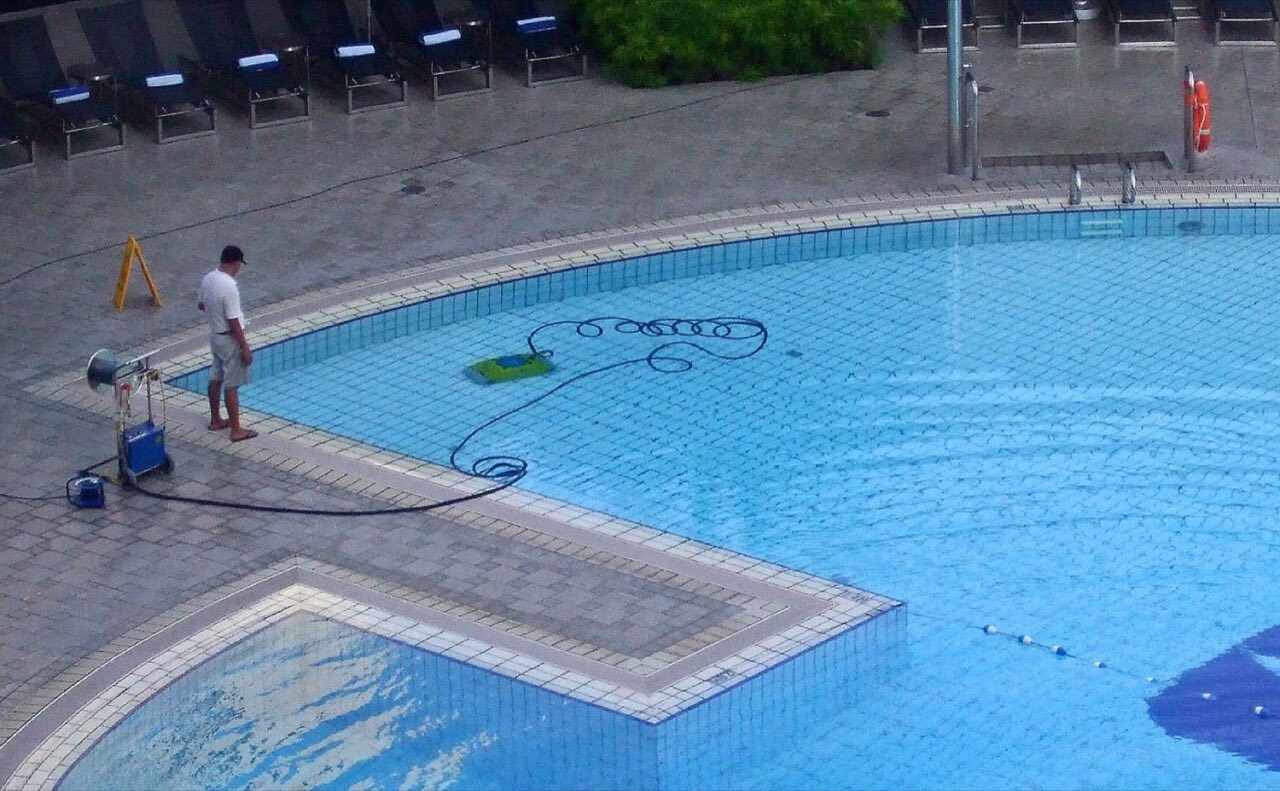
Brush the walls and floor weekly, and wipe the tile line where scale and oils collect, especially if your water runs at a high pH. Vacuum the floor, or let a robotic cleaner do it.
Water chemistry made simple
| Measure | Typical target | Why it matters |
|---|---|---|
| Free chlorine | At least 1 ppm in pools (about 1-3 ppm is common); at least 3 ppm in hot tubs | Kills germs. Too low and algae and bacteria grow. |
| pH | 7.2-7.8 | Too high and chlorine works poorly and scale forms; too low and water stings and corrodes. |
| Total alkalinity | Roughly 80-120 ppm | Buffers pH so it does not swing. |
| Calcium hardness | Roughly 200-400 ppm | Protects plaster and equipment. |
| Cyanuric acid (outdoor pools) | Roughly 30-50 ppm | Shields chlorine from sunlight. |
The chlorine and pH ranges follow CDC guidance for pools; check your local regulations and your equipment manufacturer's advice for the rest. Test chlorine and pH several times a week in summer, and after heavy use or rain.
Shocking the pool
"Shocking" means adding a large dose of chlorine or a non-chlorine oxidiser to break down chloramines and organic waste. It is useful after a party, a heatwave or a storm. Shock in the evening, keep swimmers out until levels are back in range, and never mix pool chemicals with each other.
A weekly routine
- Skim the surface and empty baskets.
- Brush walls and vacuum the floor.
- Test and adjust chlorine and pH.
- Check the filter pressure and water level.
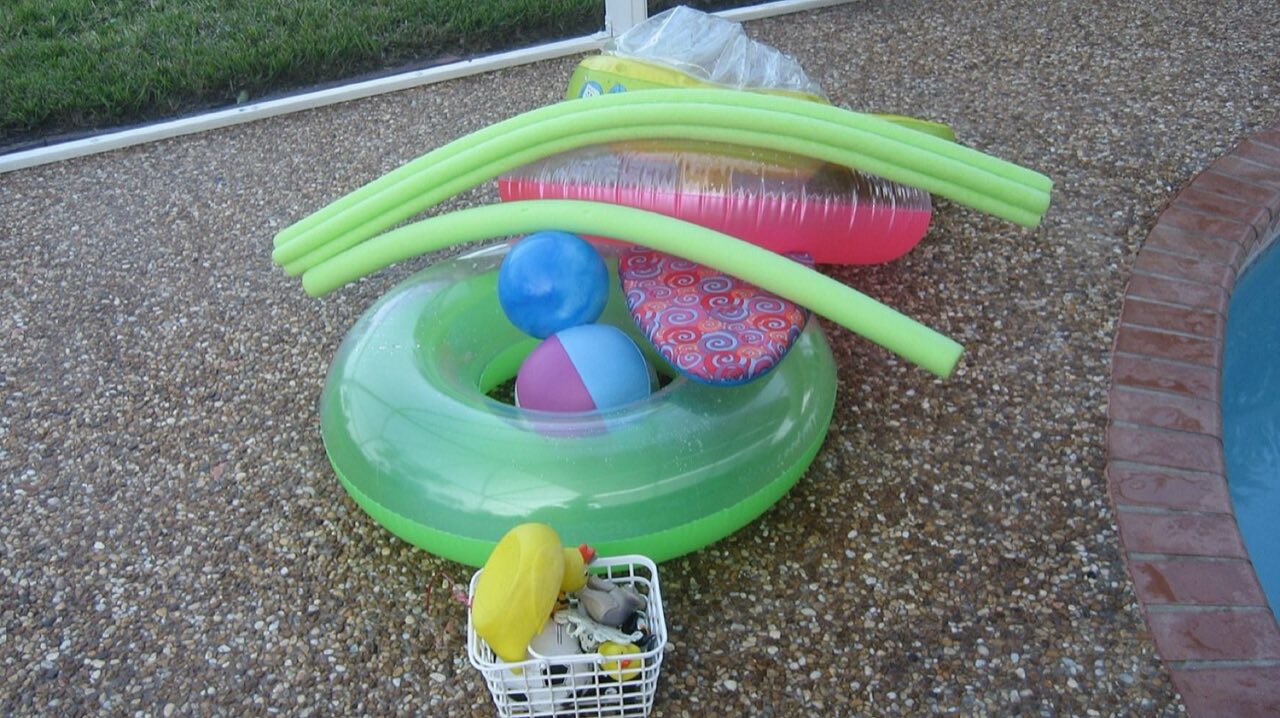
- Rinse and store floats so they are not left baking on the water; see float care tips.
Lessons from casino resort pools
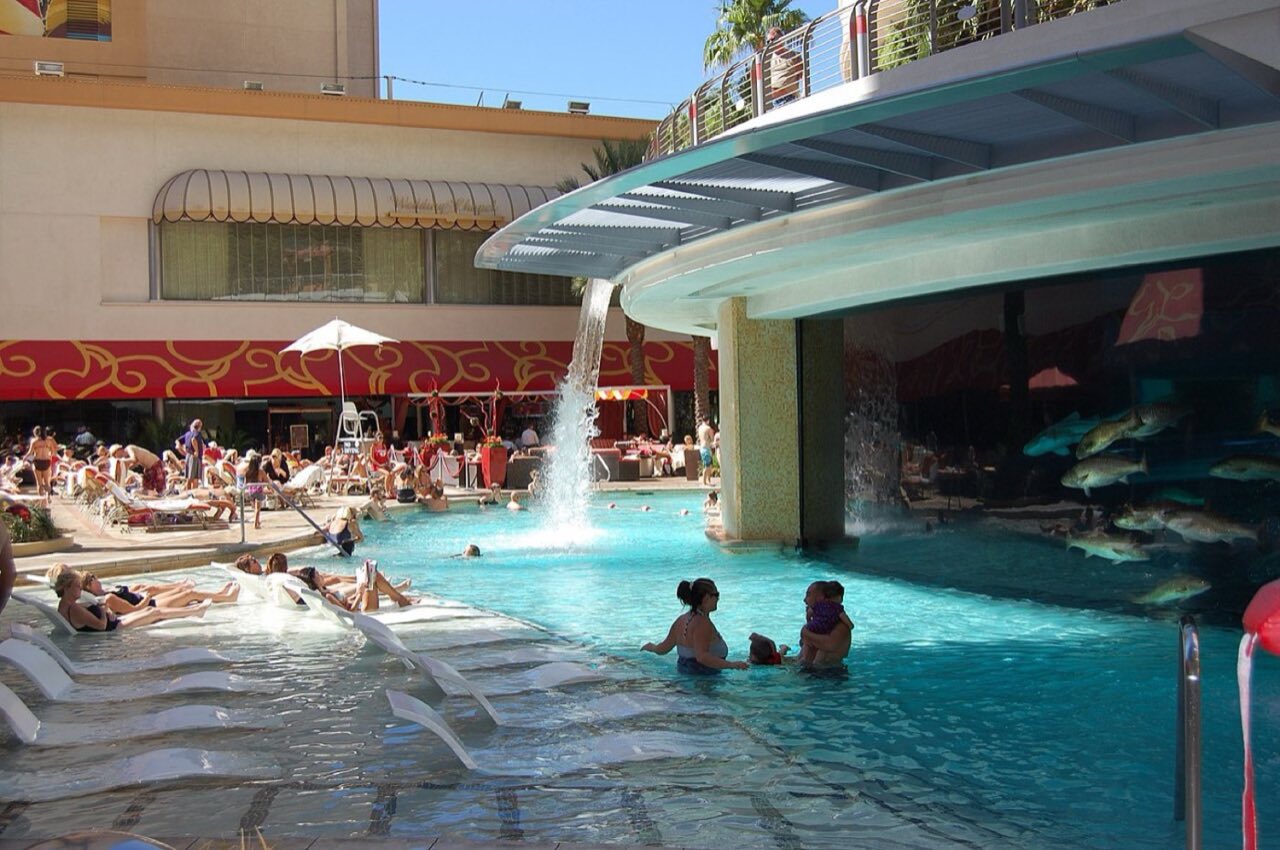
Want to see pool maintenance at industrial scale? Look at the casino resorts. Mandalay Bay's beach on the Las Vegas Strip combines a wave pool with what the resort describes as thousands of tons of real sand, all of which has to be kept clean and out of the filters. Downtown at the Golden Nugget, the pool known as The Tank wraps around a shark aquarium, with a water slide that carries riders through a clear tube inside it: two completely separate water systems, one balanced for swimmers and one for sharks and rays, sitting side by side. Resort crews test water many times a day and adjust as crowds come and go, and health authorities inspect commercial pools. A backyard pool needs nothing like that effort, but the principle is identical: test often, filter well, and respond to how hard the pool is being used. See our tour of the best casino resort pools for more on these record-breaking pools, and swim-up blackjack for the pools where the card table is part of the design.
Hosting a pool party? Shock the pool the evening before and test again in the morning. Then read how to pack for a pool party.