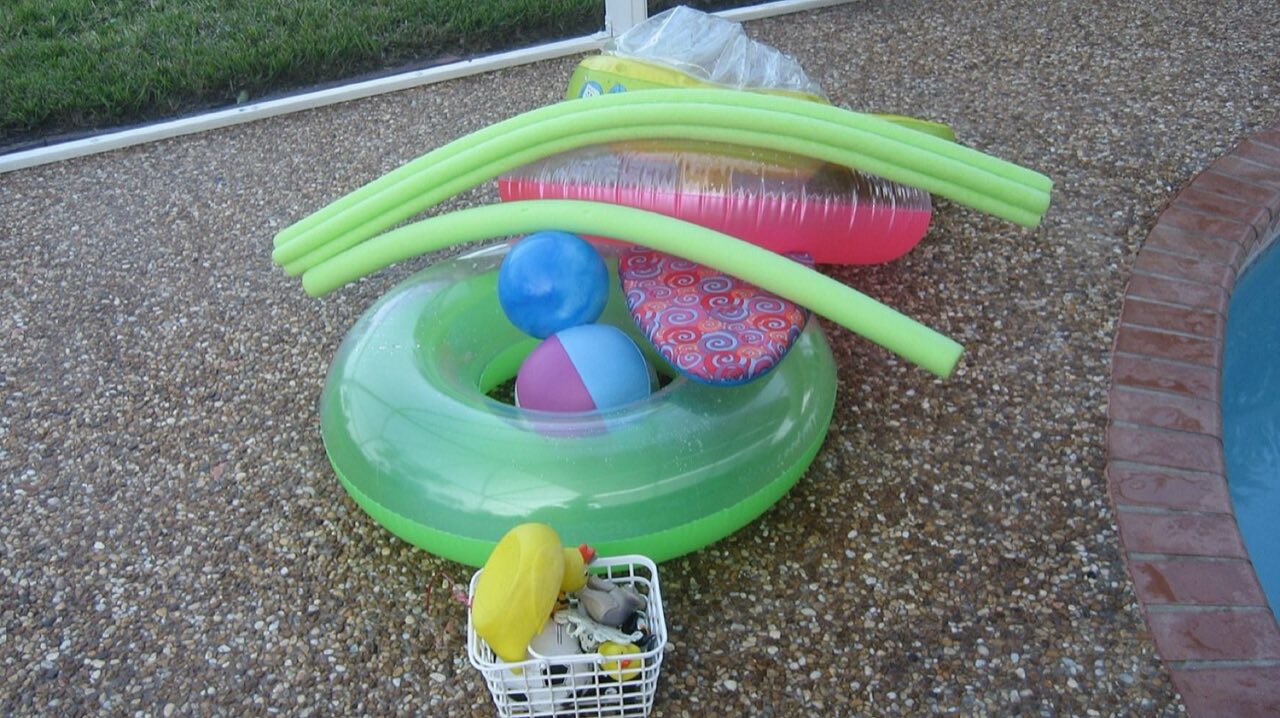
There is a huge variety of rafts, pool accessories and floats available for a summer break. With such a wide range, how do you choose the one that suits you, and how do you make it last more than one season? This guide, first published on this site in 2019 and now fully updated, covers both.
Start with the purpose
The variables that matter are the size of your pool, what you want the float for, the material and the age of the person using it. A small pool and a toddler call for something completely different from a lake weekend with friends. Decide first whether you want a raft (flat, for lounging and tanning) or a float (with a seat or backrest, for sitting upright and chatting); our pool lounger guide explains the difference in more detail.
Materials compared
| Material | Strengths | Weaknesses |
|---|---|---|
| Inflatable vinyl (PVC) | Light, cheap, packs small, endless shapes | A puncture takes it out of action until patched |
| Foam with vinyl cover | Keeps floating even when nicked; tough enough for children and pets | Heavier and bulkier to store |
| Mesh with inflatable frame | Cool, stable, folds tiny | You sit partly in the water |
| Fabric-covered inflatable | Comfortable, less sticky on skin | Slow to dry; can grow mould if stored damp |
If the float will be used by younger children or dogs, choose something more resistant than a standard party float. Claws and small teeth find seams quickly.
Types of floats at a glance
- Single loungers and rafts, inflatable, mesh or foam, for one person and some quiet time.
- Family and group floats that carry several people at once, often with cup holders; see island floats.
- Novelty floats: unicorns, flamingos, swans, donuts and food shapes.
- Children's floats and swimming aids, which need extra care in choosing; see our water safety basics.
Cleaning after use
- Rinse with fresh water after every session to remove chlorine, salt and sunscreen.
- Once or twice a season, wash with warm water and a little mild washing-up liquid; avoid solvents, bleach and abrasive pads.
- For mildew spots, a solution of mild soap and water, or a little white vinegar, usually works.
- Dry completely, including the folds and under the handles, before you deflate.
Finding and patching a puncture
- Inflate the float and listen; larger holes hiss.
- For tiny leaks, brush soapy water over the surface and watch for bubbles, or press sections under water in the pool.
- Mark the hole, deflate, and dry and clean the area.
- Apply a vinyl repair patch with the adhesive the kit specifies, rounding the patch corners so they do not peel.
- Press flat and leave it to cure for the time the kit recommends before reinflating.
Leaks along a seam or around a valve are much harder to fix permanently. A patch may hold for a while, but treat the float as near the end of its life.
Storing floats over winter
Store floats clean, bone-dry and loosely rolled in a breathable bag or box, indoors and away from heat, sunlight and sharp objects. Garages that freeze can make vinyl brittle; a cupboard is better. A sprinkle of talc on sticky vinyl stops the surfaces fusing together.
Why the cheapest float is rarely the best bet
Gamblers talk about expected value: the average result of a bet if you could make it many times. The same thinking works for floats. A bargain float that lasts three outings costs you more per swim than a sturdier one that lasts three summers, even though the price tag is lower. Here is a simple comparison, using round illustrative numbers:
| Thin bargain float | Thick, well-made float | |
|---|---|---|
| Price | 15 | 45 |
| Chance it survives a season | About 30% | About 80% |
| Expected uses before failure | About 8 | About 40 |
| Cost per use | About 1.90 | About 1.10 |
It is the same logic that tells a blackjack player a table paying 3:2 on blackjack is a far better deal than one paying 6:5, even if the minimum bet looks the same, or that tells a sports bettor to compare prices before staking. If you enjoy that kind of arithmetic, our guide to swim-up blackjack and pool gaming walks through the house edge on the tables you will meet beside the pool, and poolside poker and card games covers pot odds for friendly games.
Rule of thumb: if a float feels flimsy when you unpack it, it will not get better in the sun. Return it while you can, and spend the money on one good float rather than three poor ones.